



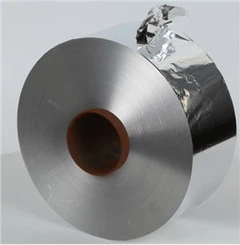


As a supplier of 5083 aluminum strip, I've had the privilege of witnessing firsthand the remarkable properties and wide - ranging applications of this material. One of the most critical aspects that often comes up in discussions with clients is its impact resistance. In this blog, I'll delve deep into what the impact resistance of 5083 aluminum strip is, how it's measured, and why it matters in various industries.
Understanding 5083 Aluminum Strip
Before we jump into impact resistance, let's briefly understand what 5083 aluminum strip is. 5083 is a magnesium - alloyed aluminum grade that offers excellent corrosion resistance, especially in marine environments. It also has good weldability and moderate strength. The strip form of 5083 aluminum is produced through a series of rolling processes, resulting in a flat and uniform product with specific thickness and width dimensions. You can learn more about different types of aluminum strip products on our website, such as Aluminum Alloy Strip and Cold Rolled Aluminum Flat Strip.
What is Impact Resistance?
Impact resistance refers to a material's ability to withstand sudden and high - force impacts without breaking, cracking, or deforming significantly. When an object strikes a material, it transfers energy to that material. A material with high impact resistance can absorb this energy effectively and distribute it throughout its structure, minimizing the damage caused by the impact.
Factors Affecting the Impact Resistance of 5083 Aluminum Strip
Alloy Composition
The alloying elements in 5083 aluminum play a crucial role in determining its impact resistance. Magnesium, the primary alloying element in 5083, enhances the strength and toughness of the aluminum. Other elements, such as manganese and chromium, also contribute to improving the overall mechanical properties of the alloy, which in turn affects its ability to resist impacts.


Heat Treatment
Heat treatment processes can significantly alter the microstructure of 5083 aluminum strip, thereby influencing its impact resistance. For example, annealing can relieve internal stresses and improve the ductility of the material, making it more capable of absorbing impact energy. On the other hand, improper heat treatment can lead to a decrease in impact resistance due to the formation of brittle phases.
Thickness and Geometry
The thickness of the 5083 aluminum strip is directly related to its impact resistance. Generally, thicker strips can withstand higher impact forces compared to thinner ones. Additionally, the geometry of the strip, such as its cross - sectional shape and edge conditions, can also affect how it responds to impacts. A well - designed geometry can help distribute the impact energy more evenly, reducing the risk of localized damage.
Measuring the Impact Resistance of 5083 Aluminum Strip
There are several standard test methods used to measure the impact resistance of materials, and for 5083 aluminum strip, the Charpy impact test and the Izod impact test are commonly employed.
Charpy Impact Test
In the Charpy impact test, a notched specimen of the 5083 aluminum strip is placed horizontally between two supports. A pendulum is then released from a specific height, striking the specimen at the notch. The energy absorbed by the specimen during the impact is measured, which provides an indication of its impact resistance. The higher the energy absorbed, the better the impact resistance of the material.
Izod Impact Test
The Izod impact test is similar to the Charpy test, but the specimen is held vertically and struck at the notch by a pendulum. This test is also used to determine the energy required to break the specimen and is often used to compare the impact resistance of different materials or different batches of the same material.
Applications of 5083 Aluminum Strip Based on Its Impact Resistance
Marine Industry
In the marine industry, 5083 aluminum strip is widely used due to its excellent corrosion resistance and good impact resistance. It is used in the construction of boat hulls, decks, and other marine structures. These structures are often exposed to waves, collisions with floating objects, and other impact - related forces. The high impact resistance of 5083 aluminum strip ensures that the marine structures can withstand these forces without significant damage, providing long - term durability.
Transportation Industry
In the transportation industry, 5083 aluminum strip is used in the manufacturing of automotive parts, such as body panels and structural components. These parts need to be able to withstand impacts from collisions, road debris, and other sources. The impact resistance of 5083 aluminum strip helps to improve the safety and reliability of vehicles. Moreover, its lightweight nature also contributes to fuel efficiency, making it an ideal choice for modern transportation applications.
Building and Construction
In building and construction, Strip of Aluminum Building Material is used in various applications, including curtain walls, roofing, and partitions. These structures may be exposed to impacts from wind - borne debris, falling objects, or accidental collisions. The impact resistance of 5083 aluminum strip ensures that the building components can maintain their integrity and functionality even under such conditions.
Comparing 5083 Aluminum Strip with Other Materials in Terms of Impact Resistance
When compared to other common materials, 5083 aluminum strip offers a good balance between impact resistance and other properties. For example, compared to steel, 5083 aluminum strip is much lighter, which is an advantage in applications where weight is a concern. Although steel may have higher absolute strength in some cases, 5083 aluminum strip can still provide sufficient impact resistance for many applications while reducing the overall weight of the structure.
Compared to some plastics, 5083 aluminum strip has significantly better impact resistance. Plastics may deform or break easily under high - impact forces, while 5083 aluminum strip can absorb and distribute the energy more effectively, making it a more reliable choice for applications that require high - performance impact protection.
Conclusion
The impact resistance of 5083 aluminum strip is a critical property that makes it suitable for a wide range of applications in various industries. Its ability to withstand sudden impacts is influenced by factors such as alloy composition, heat treatment, thickness, and geometry. Through standard test methods like the Charpy and Izod impact tests, we can accurately measure and evaluate its impact resistance.
Whether you are in the marine, transportation, or building and construction industry, 5083 aluminum strip can offer the performance and reliability you need. If you are interested in learning more about our 5083 aluminum strip products or have specific requirements for your projects, please feel free to contact us for a detailed discussion. We are committed to providing high - quality products and excellent customer service to meet your needs.
References
- ASM Handbook Volume 2: Properties and Selection: Nonferrous Alloys and Special - Purpose Materials.
- Aluminum Association Technical Papers on 5083 Aluminum Alloy.
- ASTM Standards for Impact Testing of Metals.