





Aluminum Foil
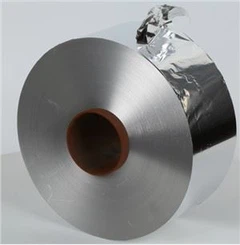
Aluminum foil is aluminum made from thin metal foil, less than 0.2 mm (7.9 mils) thick; thinner gauges as small as 4 microns are also commonly used. Standard household foils are typically 0.016 mm (0.63 mils) thick and heavy-duty household foils are typically 0.024 mm (0.94 mils) thick. Air conditioning foil can be thinner than 0.0047mm, and some food foil can be thinner than 0.002mm. Foil is flexible and can be easily bent or wrapped around objects. Thin foil is fragile and is sometimes laminated with other materials such as plastic or paper to make it stronger and more useful. It has a variety of uses in industry, including packaging, insulation and transportation. At home, people use aluminum foil to store food, cover baking surfaces, and wrap foods such as meat to prevent them from losing moisture while cooking. No matter what your needs are, QINGHAI SHUANGLIN JIATE METAL TECHNOLOGY CO., LTD. will provide specific high-quality aluminum foil products that fit your needs. Whether it's aesthetic changes or excellent mechanical properties, we'll provide you with precision aluminum foil! Contact us now, please feel free to contact us at hzjd02@jdaluminum.com.
Company Profile
Qinghai Shuanglin Jiate Metal Technology Co., Ltd. was established in September 1997, Zhejiang Shuanglin Jiate Metal Technology is professional Chinese aluminum sheet, aluminum strip,aluminum foil,aluminum circle,aluminum plate ,aluminum coil ,aluminum discs and aluminum tube manufacturer .Bearing producing first-class quality aluminium products as our task, having good faith as our belief, offering high efficiency service as our standard, we Jiate Metal will always keep on servicing for worldwide clients.
We have mills as continue cast,hot rolling,cold roJinding Aluminium Industry Group includes aluminium research and development,design,manufacture and export trading, was contributived by Hongkong Jinding International Group. We own one hot rolling production line with width 2500mm, two cold rolling mill with width 1800mm, foil rough rolling mill with width 1650mm, foil finish rolling mill with 1600mm, 8x20T annealed, tension leveled machine, cut machine and clean equipment. Our main products include aluminium sheet,aluminum coil,aluminum strip,aluminium foil and related coating process, aluminium profile for industry, aluminium strip for cable and water pipe, fin stock, decorate foil, aluminium circle for cookware. We have two large-scale rolling mills with width 2500mm and related machines. We adopt international advanced technique produce aluminium products, which can ensure our quality.
Why choose us?
High quality
Our products are manufactured or executed to very high standards, using the finest materials and manufacturing processes.
Long warranty
The long-term warranty is designed to give consumers more confidence that their purchases and services will continue to be valid.
Professional team
Our professional team collaborate and communicate effectively with one another, and are committed to delivering high-quality results. They are capable of handling complex challenges and projects that require their specialized expertise and experience.
Rich experience
Dedicated to strict quality control and attentive customer service, our experienced staff is always available to discuss your requirements and ensure complete customer satisfaction.
-
![Aluminum Foil in Cigarette Paper]()
-
![Food Packing Aliminum Foil 8011]() Food Packing Aliminum Foil 80111) Alloy: 8011read more
2) Temper: H22,H24 O
3) Thickness: 0.006mm~0.2mm
4) Width: 50mm-1500mm
5)Standard size:As your requirement -
![Industrial Aluminium Foil]() Industrial Aluminium FoilAlloy: 1235, 1060, 1070 Temper: H18,Thickness: 0.0095mm-0.025mm Width: 150mm-1890mm Used for: Lithium battery Thickness tolerance: +/- 2% Outer diameter: 260-750mm Core material: aluminum or steel...read more
-
![Aluminum Foil For Food Packaging]() Aluminum Foil For Food PackagingThickness: 0.006mm – 0.07 mm (Tolerance: +/-5%) Width: 200 – 1950 mm (Tolerance: +/-1mm) Aluminum Alloy: 1235, 8111, 8011, 8079, 8021, etc. Temper: HO (Soft)a Core Diameter: 76mm, 152mm Core...read more
-
![Kitchen Aluminum Foil]() Kitchen Aluminum FoilHigh-Performance Kitchen Aluminum Foil | 8011 Food Grade | Direct Factory Supplyread more
Supporting global wholesalers with custom thickness (8-25mic) and flexible packaging. ISO & SGS certified... -
![Industrial Aluminum Foil Rolls]() Industrial Aluminum Foil RollsAlloy 8011 Temper Soft (HO) Thickness or gauge is among 9-25 micron Common width range is 200-600mm Surface Color: Silver Surface: one side bright and the other side matte Advantages: Aluminum...read more
-
![Aluminium Foil Packaging]() Aluminium Foil PackagingAlloy: 1235 Temper: H18, O Thickness: 0.0045-0.09mm Width: 200-1890mm Length: Customized Inner Diameter: 76mm or 152mm Core Material: Aluminum or Steel Q: What is the minimum order quantity? A: 5...read more
-
![Industrial Aluminum Foil]() Industrial Aluminum FoilThickness: usually is 9 microns to 20 microns (Tolerance: 5 % more or less) Width range: 150 – 500 mm Aluminum Alloy: 8011 alloy Hardness Temper: O temper (soft) Inner Diameter: 76mm, 152mm Inner...read more
-
![Paper Fund Color Aluminum Foil]()
-
![Aluminum Cigarette Foil packing use]() Aluminum Cigarette Foil packing use1) Alloy: 8011 1235 8079 2) Temper: H22,H24,O 3) Thickness: 0.006mm~0.3mm 4) Width: 600mm-1700mm 5)Standard size:As your requirementread more
-
![Best Price Aluminum Cigarette Foil For Packing]() Best Price Aluminum Cigarette Foil For Packing1) Alloy: 1235,8011,8079read more
2) Temper: H22,H24
3) Thickness: 0.006mm~0.3mm
4) Width: 600mm-1700mm
5)Standard size:As your requirement -
![Aluminium Foil Roll Tape For Cigarettes]() Aluminium Foil Roll Tape For CigarettesAluminium Foil roll tape for cigarettes 1. Aluminum foil thickness: 6.3~6.5 μm 2. Total weight: 45 + g, 50 + 2g, + 55 + 2g 3. Width: 62mm, 70mm, 82mm, 84mm, 114mm, 115mm 4. Purpose: Suitable for...read more


How is aluminum foil made?
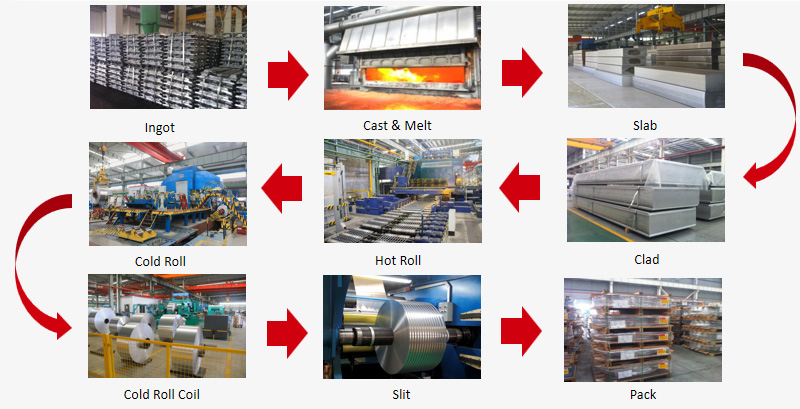
Aluminum foil is produced by rolling slab ingots cast from molten aluminum billets and then re-rolled to the required thickness on plate and foil rolling mills, or by continuous casting and cold rolling. To maintain a constant thickness in aluminum foil production, beta radiation passes through the foil to a sensor on the other side. If the strength becomes too high, the roller is adjusted to increase the thickness. If the strength becomes too low and the foil becomes too thick, the rollers apply more pressure, causing the foil to become thinner. The aluminum foil roll is then cut into smaller rolls on a slitter-rewinder. Roll slitting and rewinding are essential parts of the finishing process.
Classification of aluminum foil
Aluminum foil is classified by thickness:
T<001 – Lightweight Foil (also known as Double Zero Foil)
1≤ T ≥0.001 – medium gauge foil (also called single zero foil)
T ≥0.1mm – thick gauge foil
Aluminum foil is classified according to composite materials:
Flux wrapped aluminum foil
Galvanized aluminum foil
Bare aluminum foil
Aluminum foil is classified according to alloy grade:
1xxx series: 1050, 1060, 1070, 1100, 1200, 1350
2xxx series: 2011, 2024
3xxx series: 3003, 3104, 3105, 3005
5xxx series: 5052, 5754, 5083, 5251
6xxx series: 6061
8xxx series: 8006, 8011, 8021, 8079
Aluminum foil is classified by use:
| ● Aluminum Foil Coil For Fin Material ● Aluminum Clad Foil For Heat Transfer ● Aluminum Foil For Clad Tube Material ● Air-conditioner Foil ● Battery Aluminum Foil ● Tape Aluminum Foil ● Cable Aluminum Foil ● Pharmacy Aluminum Foil |
● Electronic Tag Aluminum Foil ● Honeycomb Aluminum Foil ● Household Aluminum Foil ● Electronic Aluminum Foil ● Packaging Aluminum Foil ● Container Aluminum Foil ● Hydrophilic Aluminum Foil ● Food Aluminum Foil |
How to choose aluminum foil grade?
When we choose aluminum, it is important to note that choosing the right alloy directly depends on performance and specific usage scenarios. Before purchasing an aluminum grade, it is crucial to pay attention to the flow Characteristics:
Tensile strength
Thermal Conductivity
Weldability
Formability
Corrosion resistance
Aluminum foil applications
Aluminum foil has a wide range of uses:
Automotive applications
Heat transfer (fin materials, welded pipe materials)
Package
Package
Lnsulation
Electromagnetic shielding
Cooking
Art and Decoration
Geochemical sampling
Ribbon microphone
Advantages of aluminum foil
Aluminum foil has a shiny metallic luster and is decorative.
Non-toxic, tasteless and odorless.
Relatively light, the specific gravity is only one-third that of iron and copper.
Full extension, thin profile, light weight per unit area.
It has good light-shielding properties and a reflectivity of 95%.
Highly protective, the packaging is therefore less susceptible to bacteria, fungi and insects.
Good high and low temperature stability, temperature resistance -73~371℃ without deformation after gluing.

Aluminium foil is a thin sheet of metal foil comprising about 92-99% aluminum. Its thickness is typically between 0.0002 to 0.006 inches. Its width and intensity are very different due to expected applications. It is a material that is durable, non-toxic, and oil-proof, which can resist chemical erosion.
Benefits of Aluminum Foil
Easy to use
Aluminum foil is very easy to tear, cut and shape to your packaging needs. Even wide rolls of industrial paper can be cut effortlessly with standard cutters or scissors. Because aluminum foil is flexible and malleable, you can shape it around irregularly sized items or create custom containers. foil foil aluminium rolls offer a cost-effective and simple solution for lightweight packaging.
Provides an effective barrier
One of the main reasons to use aluminum foil as a packaging material is its excellent barrier properties. foil foil aluminium rolls form a physical barrier that blocks moisture, light, gases and germs. This makes the nest an ideal choice for wrapping food items and keeping them fresher for longer. The shiny surface of the aluminum foil also acts as an effective reflector, helping to reduce the loss of vitamins from exposure to light.
Preserves taste and freshness
Because aluminum foil provides a reliable moisture and odor barrier, it helps preserve the flavor and freshness of packaged items. Loose tea leaves, fresh herbs and cheese will retain their flavor longer when wrapped in foil. Cookies, chips and snacks will stay fresher when stored in foil. The foil's barrier properties also help prevent cross-contamination of flavors and aromas between different foods.
Provides heat protection
While excellent at blocking heat, aluminum foil is also capable of reflecting it. This makes foil rolls ideal for use as oven liners or baking foils. When wrapping meat for grilling, foil helps seal in moisture and flavor while protecting the food from direct contact with the heating element. You can even wrap food in foil and place it on hot coals or a campfire for camping snacks.
Types of Aluminum Foil
House foils
These everyday house foils are all purpose and solve many problems around the household. These can be used to soften up brown sugar, create different shapes of bakeware, polishing silverware and keeping them untarnished. These house foils can also be used to sharpen scissors, fixing a loose connection and guarding against drips. Also these foils can be converted into almost all kinds of disposable cutlery.
Laminated lids
Aluminium lids are very useful while packaging food and can be used for covering aluminium foil containers for safe transport. Most of the small food outlets as well as large restaurants use aluminium foil lids for take away food. These lids are grease proof and provide protection against vapour and oxygen keeping the food healthy and nutritious for a longer period of time.
Chocolate foils
We all know the familiar sound of unwrapping of the chocolate foil paper. This paper is made to appear more attractive by lacquering and embossing the inner lining of the paper and provides protecting against favour loss.
Foil round seals
These foil seals are usually used on pickle and ghee jars and lubricants packs. Foil seals can also be used to embellish gift tags, books and cards and are very easy to print on. As we can see, aluminium foils are not only popular for industrial and professional uses but also comes in handy for various domestic purposes.
Aluminium foil containers
The properties of aluminium foil like heat insulation, malleability and recyclability makes it ideal for converting them into aluminium foil containers that can be used to store food. Also these aluminium food containers are odourless, moisture resistant; can be used to bake, grill and heat directly in the microwave and have great conductivity.
Application of Aluminum Foil
Package
Aluminum is used in packaging because it has a high degree of ductility: it can easily convert into a sheet and fold, roll up or pack. Aluminum foil can completely block light and oxygen, odor and taste, humidity and bacteria. So it is widely used in food and drug packaging, including long-life packaging for beverages and dairy products No need to refrigerate, you can store them. Aluminum foil containers and trays are used for baking pie and packaging takeaway food, ready-to-eat snacks and pet food.
Insulation
Aluminum materials have good insulation. The reflectance of the aluminum foil is 88%, which is widely used in heat insulation, heat exchange, and cable lining.
Electronic product
The aluminium foil in the capacitor provides a compact storage for a charge. If the foil surface is treated, the oxide coating can be used as an insulator. Aluminum foil capacitors are common in electrical equipment, including televisions and computers.
Ornaments
Heavy aluminum foil for art, decorative and crafts, especially bright metals. Metal aluminum, usually silver, can be treated into other colors by anodizing. The anodization forms a layer of oxide layer on the surface of the aluminum, which can receive a colored dye or metal salt, depending on the process used. In this way, aluminum is used to make an inexpensive gold foil, which actually does not contain gold and many other bright metals. These foils are sometimes used for unique packaging.
Process of Aluminum Foil


Casting
The production castings, fine aluminum ingots (to remove impurities) suitable for for rolled, heated to melt into molten metal. Some manufacturers will add the rolling debris to formulate different purity aluminum ingots, but the total purity is guaranteed. Molten metal generally use rolling to become billets by continuous casting.
Uniform treatment
The cast billet is maintained at a high temperature close to the melting point (20-30 hours), is homogenized. As a result of this treatment, the deformation in the casting can be well eliminated, and the impurities also dissolve in solid solution and the impurity distribution becomes uniform.
Surface cutting
Billet has irregular surface and the oxide layer.. So it is need to be cut about 8-10mm’s thick.
Hot-rolled
After the billet is heated at about 5000C, the billet is put on a rolling mill and hot-rolled. Rolling about 10 times, pressure to about 3-5mm’s thick, rolled into coils (hot coil). During rolling, rolling and recrystallization occur at the same time, the foundry structure is destroyed, resulting in rolled structure. When hot-rolled, the crystal grain size of the high-purity aluminum is about 0.5 mm.
Cold-rolled
The hot coil is cold rolled at about 800C while cooling. After about 3 times, rolled to about 0.5-0.6mm’s thick, roll into coils. This is what we commonly called the original foil.
Foil rolling
The original foil is cold-rolled into thin foil by a high-precision rolling machine. Aluminum can be rolled to minimum of 5μ. When rolling about 10μ or less, two overlapping rolling can be used. The original foil achieve the required thickness by rolling several times.
Wash winding
The rolling is finished, the rolled oil is washed away, and then wound into rolls.
Annealing
Hard foil is generally through heat treated, annealed to semi-hard or to the end of recrystallization. Sometimes provide a very soft foil by high temperature annealing close to the melting point. Annealing is an important process that determines the nature of the foil. In addition, in order to impart special properties to the aluminum foil, annealing is also carried out during the rolling.
Cut the foil
Aluminum foil produced only by rolling has irregular edges. Moreover, most users require foil that is narrower than the maximum width of the rolling. Therefore, not only about the edge of the foil, but also the rolling direction should be cut. This process is called cutting the foil, it is sometimes also carried out before annealing.
How to Maintain Aluminium Foil
Why should you store aluminum foil rolls properly?
Before delving into storage solutions, it's essential to understand why proper storage matters. Aluminum foil is known for its ability to preserve food freshness, prevent freezer burn, and facilitate even cooking. Improper storage, such as leaving the roll exposed to air or moisture, can compromise these benefits. Properly stored foil ensures it maintains its integrity, maximizing its utility in the kitchen.
Where is the ideal location for storing aluminum foil rolls?
Location matters when it comes to storing aluminum foil rolls. Avoid storing them in areas with high humidity, such as near the sink or dishwasher. Instead, opt for a cool, dry place like a pantry or a drawer away from heat sources. This helps prevent the foil from developing rust or sticking together, ensuring it's ready for use when needed.
When is the right time to replace your aluminum foil roll?
Aluminum foil has a shelf life, and using expired or compromised foil can affect its performance. If you notice signs of discoloration, stiffness, or an unusual odor, it's time to replace the roll. Regularly check your foil to ensure it's in optimal condition, so you can confidently rely on it for various culinary needs.
How can you organize aluminum foil rolls for easy access?
Efficient organization is key to a well-functioning kitchen. Consider using a dedicated organizer or a dispenser specifically designed for aluminum foil rolls. These devices not only keep your foil neatly stored but also provide easy access, eliminating the frustration of dealing with tangled or torn foil. Look for organizers that fit seamlessly into your kitchen space for added convenience.
Size and thickness
Aluminum foil specification or thickness is an important factor to consider when choosing a quality product. Thicker foil is more durable and resistant to tearing, making it better for demanding tasks such as grilling and freezing. For general household use, look for aluminum foil with a thickness of 12-18 microns.
Strength and durability
High-quality aluminum foil should have good tensile strength and resistance to puncture or tearing. It must withstand rough handling without compromising its integrity. Pay special attention to those labeled "heavy duty" or "Extra strong" to increase the durability of the film.
Thermal conductivity
The high thermal conductivity of aluminum foil is also important in cooking and baking. Choose foils that conduct heat better to ensure that your food cooks evenly and thoroughly. This feature is especially important for tasks such as baking, grilling, and baking.
Food safety
Safety is Paramount when choosing aluminum foil for food applications. Ensure that the film you choose is food safe and complies with relevant regulations and certifications, e.g. B. Comply with FDA approval. Quality films should be free from harmful chemicals and contaminants that can seep into food.
Nonstick coating
Some premium aluminum foil has a nonstick coating. This is very useful when dealing with sticky or fragile foods. The nonstick coating prevents food from sticking to the foil, making it easier to handle and reducing the risk of tearing or breaking.
Packaging
Please note that aluminum foil packaging contains valuable information about the quality of the product. Look for aluminum foil in sturdy, airtight packaging to ensure protection from moisture, odors, and other external factors that may affect quality.
Value for money
Price alone is not the only determining factor, but the overall value for money should be considered when choosing a movie. High-quality films will be slightly more expensive, but their durability and performance make them cost-effective in the long run. Evaluate prices related to product quality, functionality, and durability.
Certifications

Our Factory
Our main products include aluminium sheet,aluminum coil,aluminum strip,aluminium foil and related coating process, aluminium profile for industry, aluminium strip for cable and water pipe, fin stock, decorate foil, aluminium circle for cookware. We have two large-scale rolling mills with width 2500mm and related machines. We adopt international advanced technique produce aluminium products, which can ensure our quality.


FAQ
We're well-known as one of the leading aluminum foil manufacturers and suppliers in China. Our factory offers high quality aluminum foil made in China with competitive price. Welcome to contact us for wholesale service.