



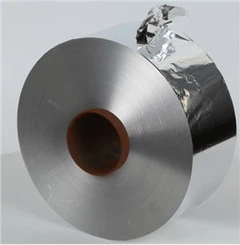


Aluminum foil is a widely used product in various industries, from household cooking to medical packaging. One common question that often arises is, "Does aluminum foil rust?" As a prominent Aluminum Foil supplier, we're here to delve into this topic and provide you with all the scientific insights you need.
Understanding Rust and Its Mechanisms
Before we dive into whether aluminum foil rusts, it's crucial to understand what rust is. Rust is a form of corrosion that specifically affects iron and its alloys, such as steel. When iron is exposed to oxygen and water, a chemical reaction occurs, leading to the formation of iron oxide, commonly known as rust. This process is an electrochemical reaction that gradually deteriorates the iron material over time.
The chemical equation for rust formation is as follows:
4Fe + 3O₂ + 6H₂O → 4Fe(OH)₃
This hydrated iron(III) oxide then breaks down further to form the familiar reddish - brown rust.
The Composition and Properties of Aluminum Foil
Aluminum foil is made primarily of aluminum, a lightweight and highly reactive metal. However, aluminum behaves differently from iron when exposed to oxygen. When aluminum comes into contact with oxygen in the air, it forms a thin, transparent layer of aluminum oxide (Al₂O₃) on its surface. This layer is extremely stable and adheres tightly to the aluminum substrate.
The chemical reaction for the formation of aluminum oxide is:
4Al + 3O₂ → 2Al₂O₃
This aluminum oxide layer acts as a protective barrier, preventing further oxygen and moisture from reaching the underlying aluminum metal. As a result, aluminum does not rust in the same sense as iron. Instead of the flaky, corrosive rust seen on iron, the aluminum oxide layer remains intact and protects the aluminum from significant degradation.
Factors Affecting Aluminum Foil Corrosion
While aluminum foil does not rust, it can still undergo a form of corrosion under certain conditions. Here are some factors that can influence the corrosion of aluminum foil:
1. pH of the Environment
The pH level of the surrounding environment can have a significant impact on aluminum foil. In highly acidic or highly alkaline conditions, the protective aluminum oxide layer can be dissolved. For example, in an acidic environment with a low pH, the hydrogen ions can react with the aluminum oxide layer:
Al₂O₃ + 6H⁺ → 2Al³⁺ + 3H₂O
Similarly, in an alkaline environment with a high pH, the hydroxide ions can react with the aluminum oxide:
Al₂O₃ + 2OH⁻ + 3H₂O → 2[Al(OH)₄]⁻
Once the protective layer is compromised, the underlying aluminum can react with the environment, leading to corrosion.
2. Presence of Salts
Salts can accelerate the corrosion process of aluminum foil. When salt is present in the environment, it can act as an electrolyte, facilitating the flow of electrons and ions during the electrochemical reaction. For instance, in a saltwater environment, the chloride ions can penetrate the aluminum oxide layer and react with the aluminum metal, causing pitting corrosion.
3. Contact with Other Metals
When aluminum foil comes into contact with more noble metals (metals that are less likely to corrode) in the presence of an electrolyte, a galvanic cell can be formed. This can lead to accelerated corrosion of the aluminum foil. For example, if aluminum foil is in contact with copper in a moist environment, the aluminum will corrode preferentially as it is more reactive than copper.
Applications of Aluminum Foil and Its Resistance to Corrosion
Aluminum foil's resistance to corrosion makes it an ideal material for a wide range of applications.


1. Household Use
In households, aluminum foil is commonly used for cooking, baking, and storing food. Its ability to resist corrosion ensures that it does not contaminate the food with rust or other corrosive by - products. You can use Household Aluminum Foil Jumbo Roll For Food Service Foi for various food - related tasks without worrying about rust or corrosion affecting your meals.
2. Medical and Pharmaceutical Packaging
In the medical and pharmaceutical industries, aluminum foil is used for packaging capsules, tablets, and pills. The protective properties of aluminum foil prevent the contents from being exposed to moisture, oxygen, and other contaminants. Medical Pharmaceutical Foil For Capsule Tablets Pills and Pharmaceutical Blister Aluminum Foil are designed to maintain the integrity of the drugs and ensure their long - term stability.
Maintaining Aluminum Foil's Integrity
To ensure that aluminum foil maintains its protective properties and does not corrode prematurely, here are some tips:
- Avoid exposing aluminum foil to highly acidic or alkaline substances for extended periods. For example, do not use aluminum foil to store lemon juice or strong cleaning agents.
- When using aluminum foil in cooking, avoid using it in contact with salt for long - term storage, as this can increase the risk of corrosion.
- If aluminum foil comes into contact with other metals, separate them as soon as possible to prevent galvanic corrosion.
Conclusion
In conclusion, aluminum foil does not rust in the traditional sense because rust is specific to iron and its alloys. Instead, aluminum forms a protective aluminum oxide layer that shields it from further oxidation. However, aluminum foil can corrode under certain conditions, such as in highly acidic or alkaline environments, in the presence of salts, or when in contact with other metals.
As a leading Aluminum Foil supplier, we offer a wide range of high - quality aluminum foil products suitable for various applications. Our products are designed to provide excellent corrosion resistance and meet the highest industry standards. If you are interested in purchasing our aluminum foil products for your household, medical, or industrial needs, we invite you to contact us for procurement discussions. We look forward to serving you and providing you with the best aluminum foil solutions.
References
- Callister, W. D., & Rethwisch, D. G. (2017). Materials Science and Engineering: An Introduction. Wiley.
- Uhlig, H. H., & Revie, R. W. (1999). Corrosion and Corrosion Control: An Introduction to Corrosion Science and Engineering. Wiley.