



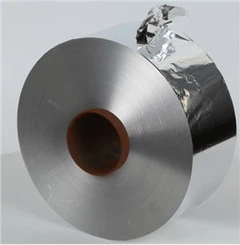


Hey there! I'm a supplier of 3003 aluminum strip, and I often get asked about its sound - insulation performance. So, let's dive right into it!
First off, let's understand what 3003 aluminum strip is. 3003 aluminum is an alloy mainly composed of aluminum with a small amount of manganese. This alloy is well - known for its good formability, corrosion resistance, and moderate strength. It's widely used in various industries like automotive, construction, and packaging.
Now, getting to the main question: what's the sound - insulation performance of 3003 aluminum strip? Well, aluminum, in general, isn't the best at blocking sound on its own. Aluminum is a metal, and metals are good conductors of sound. When sound waves hit aluminum, they can easily pass through or cause the aluminum to vibrate, which then radiates the sound to the other side.
However, that doesn't mean 3003 aluminum strip has zero sound - insulation capabilities. In fact, there are certain scenarios where it can contribute to reducing noise. For example, in cars, the 3003 aluminum strip can be used in the body structure. When combined with other sound - absorbing materials, it can help in creating a multi - layer barrier against noise. The aluminum strip can act as a shield that reflects some of the sound waves, while the other materials absorb the rest. You can find more about Aluminum Strip for Cars Licence Plates on our website.
In construction, 3003 aluminum strip can be used in building facades. When installed as part of a composite wall system, it can play a role in reducing the transmission of external noise. The strip can add an extra layer that disrupts the path of sound waves, making it a bit harder for the noise to get inside the building.
The thickness of the 3003 aluminum strip also matters when it comes to sound insulation. Thicker strips generally have better sound - blocking properties. A thicker strip has more mass, and according to the mass law in acoustics, the more mass a material has, the better it can block sound. For instance, a 1 - millimeter thick 3003 aluminum strip will have a different sound - insulation performance compared to a 3 - millimeter thick one.
If you're looking for a more standard size, our 1 Inch Aluminum Strip is a popular choice. It's versatile and can be used in many applications where sound insulation might be a consideration.
But remember, the sound - insulation performance of 3003 aluminum strip is also affected by how it's installed. If it's not properly sealed or if there are gaps, sound can easily leak through. So, for the best results, it should be installed with care, and any joints or edges should be sealed properly.
Another factor to consider is the frequency of the sound. Different materials perform differently at various sound frequencies. 3003 aluminum strip might be more effective at blocking high - frequency sounds compared to low - frequency ones. High - frequency sounds have shorter wavelengths, and they are more likely to be reflected or absorbed by the aluminum strip's structure.
In some cases, you might want to enhance the sound - insulation performance of 3003 aluminum strip even further. One way to do this is by applying a damping material on the surface of the strip. Damping materials can reduce the vibration of the aluminum, which in turn reduces the radiated sound.
To really understand the sound - insulation performance of 3003 aluminum strip in a specific application, it's a good idea to conduct some tests. You can measure the sound transmission loss (STL) of the strip in a controlled environment. STL is a measure of how well a material blocks sound, and it's usually expressed in decibels (dB). The higher the STL value, the better the material is at blocking sound.


In conclusion, while 3003 aluminum strip isn't a top - notch sound - insulation material on its own, it can still contribute to noise reduction in the right applications and when combined with other materials. Its formability, corrosion resistance, and moderate strength make it a practical choice for many industries.
If you're in the market for 3003 aluminum strip and want to discuss its sound - insulation performance for your specific needs, feel free to reach out. We're here to help you find the best solution for your project. Whether you're working on a car, a building, or any other application, we can provide you with high - quality 3003 aluminum strip.
References
- Acoustics Handbook, edited by Malcolm J. Crocker
- Aluminum Association Technical Papers on 3003 Aluminum Alloy