



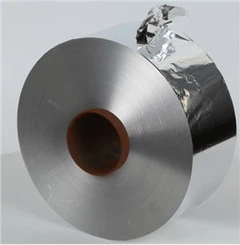


Microstructure plays a crucial role in determining the properties of 5083 aluminum strip. As a supplier of 5083 Aluminum Strip, I have witnessed firsthand how the intricate details of the microstructure can significantly impact the performance and characteristics of this material. In this blog, we will delve into the effects of microstructure on the properties of 5083 aluminum strip, exploring how different microstructural features influence its mechanical, corrosion, and other important properties.
Influence of Microstructure on Mechanical Properties
The mechanical properties of 5083 aluminum strip, such as strength, ductility, and toughness, are closely related to its microstructure. The grain size, shape, and orientation of the aluminum alloy have a profound impact on these properties.
Grain Size
The grain size of 5083 aluminum strip has a direct influence on its strength and ductility. Generally, a smaller grain size leads to higher strength and better ductility. This is because smaller grains provide more grain boundaries, which act as barriers to dislocation movement. When a force is applied to the material, dislocations are hindered by these grain boundaries, making it more difficult for the material to deform. As a result, the material exhibits higher strength. At the same time, smaller grains also allow for more uniform deformation, which enhances the ductility of the material.
For example, in cold-rolled 5083 aluminum strip, the grain size can be refined through the cold rolling process. Cold rolling involves passing the aluminum strip through a series of rollers at room temperature, which reduces the thickness of the strip and refines the grain structure. The refined grain structure not only increases the strength of the strip but also improves its formability, making it suitable for a wide range of applications, such as in the automotive and aerospace industries.
Grain Shape and Orientation
The shape and orientation of the grains in 5083 aluminum strip can also affect its mechanical properties. Elongated grains, for instance, can provide better strength in the direction of the grain elongation. This is because the dislocations can move more easily along the long axis of the grains, resulting in higher strength in that direction. On the other hand, randomly oriented grains can provide more isotropic properties, meaning that the material has similar mechanical properties in all directions.
In some cases, the orientation of the grains can be controlled through processes such as hot rolling and annealing. Hot rolling involves heating the aluminum strip to a high temperature and then rolling it, which can cause the grains to align in a specific direction. Annealing, on the other hand, is a heat treatment process that can be used to relieve internal stresses and modify the grain structure. By carefully controlling these processes, the mechanical properties of the 5083 aluminum strip can be tailored to meet the specific requirements of different applications.
Impact of Microstructure on Corrosion Resistance
Corrosion resistance is another important property of 5083 aluminum strip, especially in applications where the material is exposed to harsh environments. The microstructure of the aluminum strip can have a significant impact on its corrosion resistance.
Intermetallic Compounds
5083 aluminum strip contains various intermetallic compounds, such as Mg2Si and Al6Mn. These intermetallic compounds can act as cathodic sites, which can accelerate the corrosion process. However, the distribution and size of these intermetallic compounds can also affect the corrosion resistance of the material.
For example, if the intermetallic compounds are evenly distributed and have a small size, they can act as barriers to the diffusion of corrosive agents, thereby improving the corrosion resistance of the material. On the other hand, if the intermetallic compounds are large and clustered, they can create local galvanic cells, which can increase the rate of corrosion.
Grain Boundaries
Grain boundaries can also play a role in the corrosion resistance of 5083 aluminum strip. Grain boundaries are regions of high energy where atoms are more mobile. As a result, they can be more susceptible to corrosion. However, the presence of certain elements, such as chromium and zinc, can improve the corrosion resistance of the grain boundaries.
In addition, the microstructure of the grain boundaries can also affect the corrosion resistance. For example, a fine-grained structure with a large number of grain boundaries can provide more sites for the formation of a protective oxide layer, which can enhance the corrosion resistance of the material.
Other Effects of Microstructure on 5083 Aluminum Strip Properties
In addition to mechanical and corrosion properties, the microstructure of 5083 aluminum strip can also affect other properties, such as electrical conductivity and thermal conductivity.
Electrical Conductivity
The electrical conductivity of 5083 aluminum strip is influenced by its microstructure. The presence of impurities and intermetallic compounds can reduce the electrical conductivity of the material. For example, the presence of iron and silicon impurities can form intermetallic compounds, which can scatter electrons and reduce the electrical conductivity.
On the other hand, a fine-grained structure can improve the electrical conductivity of the material. This is because the grain boundaries can act as barriers to the movement of electrons, reducing the scattering of electrons and increasing the electrical conductivity.


Thermal Conductivity
The thermal conductivity of 5083 aluminum strip is also related to its microstructure. Similar to electrical conductivity, the presence of impurities and intermetallic compounds can reduce the thermal conductivity of the material. A fine-grained structure can improve the thermal conductivity by providing more paths for the transfer of heat.
Conclusion
In conclusion, the microstructure of 5083 aluminum strip has a significant impact on its properties. The grain size, shape, and orientation, as well as the presence of intermetallic compounds and grain boundaries, can all affect the mechanical, corrosion, electrical, and thermal properties of the material. As a supplier of Aluminum Alloy Strip, we understand the importance of controlling the microstructure of 5083 aluminum strip to meet the specific requirements of our customers. Whether you need Strip of Aluminum Building Material or Cold Rolled Aluminum Flat Strip, we can provide you with high-quality products that are tailored to your needs.
If you are interested in purchasing 5083 aluminum strip, please feel free to contact us for more information and to discuss your specific requirements. We look forward to working with you to meet your aluminum strip needs.
References
- [1] "Aluminum Alloys: Structure and Properties," by John E. Hatch.
- [2] "Corrosion of Aluminum and Aluminum Alloys," by H. H. Uhlig and R. W. Revie.
- [3] "Mechanical Metallurgy," by George E. Dieter.