



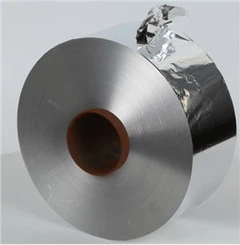


The demand for high-quality 8011 aluminum strip has been on the rise across various industries, from packaging to construction, due to its excellent corrosion resistance, good formability, and high strength-to-weight ratio. As a leading 8011 aluminum strip supplier, we understand the critical importance of ensuring the straightness of our products. Straightness not only affects the appearance of the final product but also its functionality and performance. In this blog post, we will delve into the key factors and techniques that can be employed to guarantee the straightness of 8011 aluminum strip.
Understanding the Importance of Straightness
Straightness is a fundamental quality parameter for 8011 aluminum strip. In applications such as automotive manufacturing, where precision is crucial, even the slightest deviation from straightness can lead to fitting issues and compromise the overall quality of the assembled parts. In the packaging industry, straight strips are essential for smooth operation on high-speed production lines, ensuring that the packaging process runs efficiently without any jams or misalignments. Moreover, straight strips are easier to handle, store, and transport, reducing the risk of damage and improving overall productivity.
Factors Affecting the Straightness of 8011 Aluminum Strip
Several factors can influence the straightness of 8011 aluminum strip during the production process. Understanding these factors is the first step in implementing effective measures to ensure straightness.
1. Rolling Process
The rolling process is one of the most critical stages in the production of 8011 aluminum strip. Uneven rolling, such as inconsistent roll pressure or improper roll alignment, can cause the strip to become wavy or curved. To address this issue, advanced rolling mills equipped with precision control systems are used to ensure uniform roll pressure and accurate alignment. Regular maintenance and calibration of the rolling equipment are also essential to prevent any wear and tear that could affect the straightness of the strip.
2. Heat Treatment
Heat treatment is another key factor that can impact the straightness of 8011 aluminum strip. Improper heat treatment, such as rapid cooling or uneven heating, can introduce internal stresses in the strip, leading to distortion. To ensure straightness, strict control of the heat treatment process is necessary. This includes precise temperature control, proper heating and cooling rates, and uniform distribution of heat throughout the strip. Advanced heat treatment furnaces with sophisticated controls are employed to achieve this goal.
3. Coiling and Uncoiling
The coiling and uncoiling process can also affect the straightness of 8011 aluminum strip. If the strip is coiled too tightly or with uneven tension, it can develop permanent bends or kinks. Similarly, during the uncoiling process, improper handling or excessive tension can cause the strip to become distorted. To prevent these issues, specialized coiling and uncoiling equipment are used, which are designed to maintain consistent tension and ensure gentle handling of the strip.
4. Material Properties
The inherent properties of 8011 aluminum, such as its grain structure and alloy composition, can also influence its straightness. For example, an inhomogeneous grain structure or the presence of impurities can make the strip more prone to distortion. To ensure high-quality material, strict quality control measures are implemented during the melting and casting process. This includes the use of high-purity raw materials, precise alloying, and advanced refining techniques to eliminate any impurities and ensure a uniform grain structure.
Techniques for Ensuring Straightness
Based on the above factors, several techniques can be employed to ensure the straightness of 8011 aluminum strip.
1. Precision Rolling
As mentioned earlier, precision rolling is crucial for achieving straight 8011 aluminum strip. Advanced rolling mills are equipped with multiple stands and roll adjustment mechanisms that allow for precise control of the rolling process. These mills can adjust the roll gap, pressure, and speed to ensure uniform deformation of the strip and minimize any variations in thickness. Additionally, online inspection systems are used to monitor the thickness and flatness of the strip during rolling, allowing for immediate adjustments if any deviations are detected.
2. Hot and Cold Straightening
Hot and cold straightening techniques are commonly used to correct any minor deviations in straightness after the rolling process. Hot straightening is typically performed at high temperatures, which allows the strip to be more easily deformed. This process is often used for thicker strips or when the straightening requirements are more stringent. Cold straightening, on the other hand, is performed at room temperature and is suitable for thinner strips. Both techniques involve passing the strip through a series of straightening rolls or presses to apply controlled pressure and gradually correct the shape of the strip.


3. Stress Relief Annealing
Stress relief annealing is an important process for reducing internal stresses in the 8011 aluminum strip. After the rolling and straightening processes, the strip may contain residual stresses that can cause it to warp or distort over time. Stress relief annealing involves heating the strip to a specific temperature and holding it there for a certain period of time to allow the internal stresses to relax. This process helps to improve the dimensional stability of the strip and ensures long-term straightness.
4. Quality Control and Inspection
Quality control and inspection are essential at every stage of the production process to ensure the straightness of 8011 aluminum strip. In addition to online inspection during rolling, offline inspection techniques such as visual inspection, measuring with straightedges and calipers, and using optical measuring devices are also employed. These methods allow for the detection of any minor imperfections or deviations in straightness that may not be visible to the naked eye. Only strips that meet the strict quality standards are approved for shipment.
Products Offered by Our Company
We offer a wide range of high-quality 8011 aluminum strip products to meet the diverse needs of our customers. Our products include Strip Aluminum Plate, which are available in various sizes and thicknesses and are suitable for a variety of applications. We also provide Aluminum Strip Roll, which are convenient for storage and transportation and can be easily cut to the desired length. In addition, our Aluminum Strip Thin products are ideal for applications that require a thin and lightweight material.
Conclusion
Ensuring the straightness of 8011 aluminum strip is a complex process that requires careful attention to every aspect of the production process. By understanding the factors that affect straightness and implementing effective techniques to control them, we can guarantee the highest quality products for our customers. As a trusted 8011 aluminum strip supplier, we are committed to providing straight, high-quality products that meet the most stringent industry standards. If you are interested in our products or have any questions about ensuring the straightness of 8011 aluminum strip, please feel free to contact us for further discussion and procurement negotiations.
References
- Aluminum Association. (Year). Aluminum Standards and Data.
- Metals Handbook Committee. (Year). Metals Handbook: Properties and Selection - Nonferrous Alloys and Pure Metals.