



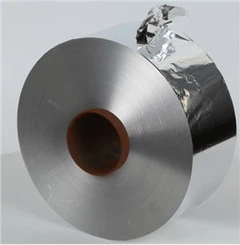


Hey there! As an Aluminum Plain Coil supplier, I've seen firsthand how the chemical composition of these coils can have a huge impact on their properties. In this blog, I'm gonna break down the key elements in aluminum plain coils and explain how they affect things like strength, corrosion resistance, and formability.
Let's start with the basics. Aluminum is the main component of these coils, but it's rarely used in its pure form. Instead, it's alloyed with other elements to enhance its performance. The most common alloying elements in aluminum plain coils include copper, manganese, silicon, magnesium, and zinc. Each of these elements brings something unique to the table, and understanding their roles is crucial for getting the most out of your aluminum coils.
Copper
Copper is often added to aluminum alloys to increase strength and hardness. When copper is present in the alloy, it forms a solid solution with aluminum, which helps to strengthen the material. This is particularly useful in applications where high strength is required, such as in structural components or automotive parts. However, too much copper can also make the alloy more susceptible to corrosion, so it's important to find the right balance.
Manganese
Manganese is another important alloying element in aluminum plain coils. It helps to improve the strength and hardness of the alloy, as well as its resistance to corrosion. Manganese also has a beneficial effect on the formability of the material, making it easier to shape and bend. In addition, manganese can help to reduce the grain size of the alloy, which can improve its mechanical properties.
Silicon
Silicon is commonly added to aluminum alloys to improve their fluidity and castability. It also helps to increase the strength and hardness of the alloy, particularly at high temperatures. Silicon is often used in aluminum castings, where its ability to improve fluidity allows for the production of complex shapes. In aluminum plain coils, silicon can help to improve the surface finish and reduce the risk of cracking during forming.
Magnesium
Magnesium is a lightweight element that is often added to aluminum alloys to improve their strength-to-weight ratio. It also helps to increase the corrosion resistance of the alloy, making it suitable for applications in harsh environments. Magnesium can also improve the formability of the material, making it easier to roll and shape into coils.
Zinc
Zinc is another alloying element that can be added to aluminum plain coils to improve their strength and corrosion resistance. It forms a protective layer on the surface of the alloy, which helps to prevent corrosion. Zinc is often used in marine applications, where the alloy is exposed to saltwater and other corrosive elements.
Now that we've covered the key alloying elements in aluminum plain coils, let's take a look at how their chemical composition affects the properties of the material.


Strength
The strength of an aluminum plain coil is determined by its chemical composition and the processing it undergoes. As we've seen, alloying elements such as copper, manganese, and magnesium can increase the strength of the alloy. However, the strength of the coil also depends on the heat treatment it receives. Heat treatment can be used to increase the strength and hardness of the alloy, as well as to improve its toughness and ductility.
Corrosion Resistance
Corrosion resistance is an important property of aluminum plain coils, particularly in applications where the material is exposed to harsh environments. The chemical composition of the alloy plays a crucial role in determining its corrosion resistance. Elements such as zinc and magnesium can help to improve the corrosion resistance of the alloy by forming a protective layer on the surface. In addition, the surface finish of the coil can also affect its corrosion resistance. A smooth, clean surface is less likely to corrode than a rough or dirty surface.
Formability
Formability is another important property of aluminum plain coils. The ability to shape and bend the material is crucial in many applications, such as in the manufacturing of automotive parts or building materials. The chemical composition of the alloy can affect its formability. Elements such as silicon and magnesium can improve the formability of the material by making it more ductile and less prone to cracking. In addition, the processing of the coil, such as rolling and annealing, can also affect its formability.
Thermal Conductivity
Thermal conductivity is an important property of aluminum plain coils, particularly in applications where heat transfer is required. Aluminum is a good conductor of heat, and the addition of certain alloying elements can further improve its thermal conductivity. For example, copper and silicon can both increase the thermal conductivity of the alloy. This makes aluminum plain coils suitable for applications such as heat exchangers and electronic components.
Electrical Conductivity
Electrical conductivity is another important property of aluminum plain coils. Aluminum is a good conductor of electricity, and the addition of certain alloying elements can further improve its electrical conductivity. For example, copper can increase the electrical conductivity of the alloy. This makes aluminum plain coils suitable for applications such as electrical wiring and electrical components.
In conclusion, the chemical composition of aluminum plain coils has a significant impact on their properties. By understanding the role of each alloying element, you can choose the right alloy for your specific application. Whether you need high strength, corrosion resistance, formability, thermal conductivity, or electrical conductivity, there is an aluminum alloy that can meet your needs.
If you're in the market for Aluminum Plain Coils, we've got a great selection to choose from. Our H26 Color Coated Aluminum Coil Decorative Alloy 3003 is perfect for decorative applications, while our Aluminum Coil Air Conditioner is designed for use in air conditioning systems.
If you have any questions or need help choosing the right aluminum plain coil for your project, don't hesitate to reach out. We're here to help you find the perfect solution for your needs. Contact us today to start the conversation!
References
- ASM Handbook, Volume 2: Properties and Selection: Nonferrous Alloys and Special-Purpose Materials.
- Aluminum Association. Aluminum Standards and Data.
- Metals Handbook Desk Edition, 2nd Edition.