



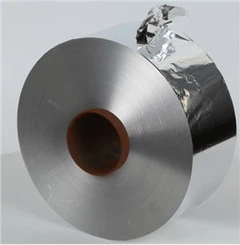


Aluminum coils are long, flat sheets of aluminum that are rolled into tight coils and wound around a core. Aluminum coils are typically hollow cylinders with thicker edges that appear to be tightly packed.
Aluminum coils are used in many industries and applications because they have many desirable properties, including:
Easy to store and transport: Coils are more compact than flat sheets of aluminum, making them easier to transport and store.
Lightweight: Aluminum coils have a low density, making them portable.
Durable: Aluminum coils can be recycled.
Corrosion resistance: Aluminum coils are resistant to weathering and corrosion.
Thermal and electrical conductivity: Aluminum coils are good conductors of heat and electricity.
Aluminum coils come in different sizes, including:
Inner diameter
The width of the hole formed when the coil is wound around the core. Common inner diameters include 406 mm, 508 mm, and 610 mm.
Outer diameter
The diameter of the outer round profile of the coil. This size depends on the coiling machine used to process the coil.
Aluminum coils are used in many industries, including transportation and electronics:
Transportation
Aluminum is used to make wheels, radiators, engine components, and car doors.
Electronics
Aluminum is used to make larger components such as heat sinks, stamped parts, shielding, and housings.