



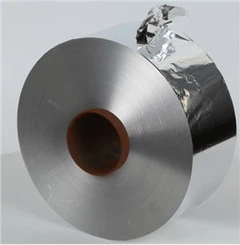


Introduction: The Precision Revolution in Aluminum Manufacturing
The aluminum sheet industry stands at the threshold of a manufacturing revolution driven by unprecedented advances in processing technologies, quality control systems, and production methodologies. Where traditional aluminum processing balanced speed, precision, and cost in necessarily compromised equations, contemporary breakthroughs enable manufacturers to achieve previously unattainable combinations of dimensional accuracy, material properties, and production efficiency. This transformation is particularly evident in the production of high-precision aluminum sheets for demanding applications in electronics, aerospace, precision engineering, and advanced packaging, where tolerances once measured in millimeters have shrunk to microns. This article examines the technical frontiers defining modern aluminum sheet processing, exploring how innovations in rolling technologies, heat treatment methodologies, surface engineering, and quality assurance systems are enabling manufacturers to produce aluminum sheets with increasingly sophisticated properties while expanding the boundaries of what is technically and economically feasible.
Ultra-Precision Rolling: Achieving Micron-Level Control in Sheet Production
The quest for ever-thinner, more uniform aluminum sheets has driven revolutionary advances in rolling technology, with contemporary mills achieving precision levels that were literally unimaginable just a decade ago. This precision revolution spans multiple dimensions of the rolling process, from thickness control to surface quality and dimensional stability.
Advanced Thickness Control Systems represent perhaps the most significant advancement in precision rolling. Modern mills incorporate sophisticated closed-loop control systems that continuously monitor and adjust rolling parameters in real time to maintain exceptional thickness consistency. These systems typically combine X-ray or gamma-ray thickness gauges with hydraulic position control responding within milliseconds to deviations from target specifications. The most advanced installations achieve remarkable precision, with thickness tolerances as tight as ±0.001mm maintained consistently across production runs . This level of control is particularly critical for applications like capacitor foils in electronics, where thickness variations directly impact electrical performance, and packaging materials, where precise gauge control optimizes material usage while ensuring consistent barrier properties.
Tension Control Innovations have addressed one of the most persistent challenges in ultra-thin aluminum rolling: maintaining stable tension across increasingly delicate material webs. Advanced mills now implement sophisticated "speed-tension"联动控制模式 (linked control modes) that dynamically coordinate unwind tension, rolling tension, and rewind tension while compensating for variables including material elasticity, thermal expansion, and frictional characteristics . These systems prevent the web breaks that historically limited production speeds and yields for ultra-thin materials while enabling manufacturers to push thickness boundaries further. Recent breakthroughs have demonstrated successful production of aluminum sheets as thin as 0.05mm with production speeds exceeding 1100 meters per minute-achievements made possible only through these advanced tension control methodologies .
Flatness and Shape Control Technologies have evolved dramatically to meet increasingly stringent requirements for dimensional stability. Contemporary mills employ sophisticated shape measurement systems using laser profilometry, air bearing sensors, or contactless optical measurement to create detailed three-dimensional maps of material flatness. This data drives automatic flatness control systems that adjust individual roll bending mechanisms, roll thermal profiles, and differential tension zones across the material width to correct flatness deviations in real time. The most advanced systems can detect and correct flatness defects with wave heights as small as 0.5mm over measurement lengths of one meter, ensuring material meets the exacting requirements of applications like lithographic printing plates, electronic circuit substrates, and precision reflectors .
Thermal Processing Innovations: Engineering Microstructure for Optimal Performance
Heat treatment represents a critical phase in aluminum sheet production, where precise control of time-temperature parameters determines final material properties including strength, ductility, formability, and corrosion resistance. Recent innovations in thermal processing have dramatically enhanced manufacturers' ability to engineer specific microstructures and properties tailored to application requirements.
Precision Annealing Technologies have evolved from relatively crude batch processes to sophisticated continuous systems offering exceptional control over thermal profiles. Modern continuous annealing lines incorporate multiple heating zones with individual temperature control, precise atmosphere management to prevent surface oxidation, and rapid quenching capabilities to freeze in desired microstructures. These systems enable manufacturers to produce materials with specifically engineered grain structures, precipitation states, and texture characteristics that optimize properties for particular applications. For automotive body sheets, this might involve developing specific recrystallization textures that enhance formability for deep-drawing applications, while for aerospace materials, the focus might be on creating controlled precipitation distributions that maximize strength while maintaining adequate fracture toughness .
Solution Heat Treatment Breakthroughs have enabled production of high-strength aluminum alloys with previously unattainable combinations of properties. Advanced continuous solution heat treatment lines combine precisely controlled heating rates, soaking temperatures maintained within ±2°C, and rapid quenching systems achieving cooling rates exceeding 100°C per second. These capabilities are particularly critical for 7000-series aluminum alloys used in aerospace applications, where maximizing solution of alloying elements followed by rapid quenching to create supersaturated solid solutions forms the foundation for subsequent age-hardening treatments. Modern systems achieve this with minimal thermal distortion and residual stresses, reducing subsequent straightening requirements while improving final dimensional accuracy .
Age-Hardening Process Control has advanced through innovations in both equipment and methodology. Contemporary continuous aging lines offer precise control over time-temperature profiles with sophisticated ramp rate management, multiple temperature plateaus, and final cooling control. This precision enables manufacturers to develop specific precipitation sequences that optimize the balance between strength, corrosion resistance, and fracture toughness for particular applications. For automotive sheets, this might involve developing paint-bake hardening responses that allow materials to gain strength during the vehicle manufacturing process, while for aerospace applications, the focus might be on creating stable precipitation structures that resist overaging during long-term service at elevated temperatures .
Surface Engineering: Creating Functional Interfaces Through Advanced Treatments
The surface characteristics of aluminum sheets play critical roles in numerous applications, influencing properties including corrosion resistance, paint adhesion, optical characteristics, tribological behavior, and hygienic properties. Advances in surface engineering have transformed aluminum from a material requiring protection to one offering sophisticated surface functionalities.
Advanced Anodizing Technologies have evolved far beyond traditional decorative applications to create engineered surfaces with precisely controlled characteristics. Modern hard anodizing processes produce oxide layers with thicknesses up to 100μm and hardness values exceeding 500 Vickers, creating wear-resistant surfaces suitable for demanding applications in hydraulic systems, pneumatic components, and industrial machinery . Colored anodizing processes have advanced through innovations in electrolyte chemistry, voltage control, and sealing techniques, enabling production of consistent, durable colors with exceptional lightfastness and chemical resistance. Perhaps most significantly, architectural anodizing has developed into a sophisticated specialty, with processes tailored to specific alloy compositions and architectural requirements, producing surfaces that maintain their appearance through decades of outdoor exposure with minimal maintenance .
Conversion Coating Innovations have created environmentally friendly alternatives to traditional chromate treatments while offering superior performance in many applications. Advanced titanium-zirconium based conversion coatings provide excellent corrosion protection and paint adhesion without containing regulated heavy metals, addressing both environmental concerns and regulatory requirements . Nano-ceramic conversion coatings represent another frontier, creating ultra-thin protective layers with thicknesses below 100 nanometers that provide exceptional barrier properties while maintaining electrical conductivity-a critical requirement for applications in electronics and aerospace. These advanced conversion coatings enable aluminum to meet increasingly stringent performance requirements while addressing growing environmental and regulatory pressures.
Physical Vapor Deposition (PVD) and Chemical Vapor Deposition (CVD) technologies have expanded the functional capabilities of aluminum surfaces far beyond traditional treatments. PVD coatings can deposit ultra-hard materials like titanium nitride or diamond-like carbon onto aluminum surfaces, creating exceptional wear resistance for applications in precision machinery and cutting tools. CVD processes enable deposition of functional coatings including thermal barrier layers, optical coatings, and hydrophobic surfaces that repel water and contaminants. These advanced surface engineering capabilities transform aluminum from a structural material into a multi-functional component with surface properties precisely engineered for specific applications, expanding its utility across increasingly diverse industrial sectors.
Quality Assurance and Process Control: The Digital Transformation of Aluminum Manufacturing
The digital revolution has transformed quality assurance and process control in aluminum sheet production, moving from periodic sampling and laboratory analysis to continuous real-time monitoring and predictive quality management. This transformation enables manufacturers to achieve unprecedented levels of consistency, traceability, and process optimization.
Inline Measurement Systems have evolved from simple thickness gauges to comprehensive multi-parameter monitoring stations. Modern lines incorporate sophisticated sensors that continuously measure thickness, width, flatness, surface roughness, coating weight, and even microstructural characteristics through advanced techniques like laser ultrasonics and eddy current arrays. This data streams to centralized process control systems that analyze information in real time, identifying trends and deviations before they result in non-conforming product . The most advanced systems employ machine learning algorithms that continuously optimize process parameters based on measurement feedback, creating self-optimizing production lines that maintain target specifications despite variations in raw material characteristics, environmental conditions, and equipment states.
Automated Defect Detection has been revolutionized by advances in machine vision and artificial intelligence. High-resolution line scan cameras combined with sophisticated image processing algorithms can now identify surface defects including scratches, stains, pits, inclusions, and coating irregularities with sensitivity exceeding human inspection capabilities . These systems typically operate at full production speeds, inspecting 100% of material surface area and automatically classifying defects by type, size, and severity. The most advanced implementations employ deep learning neural networks that continuously improve detection accuracy through experience, adapting to new defect patterns and production conditions without explicit reprogramming. This technology has dramatically improved quality consistency while reducing inspection labor and minimizing customer rejections due to surface quality issues.
Predictive Quality Management represents the frontier of quality assurance, employing advanced analytics and process modeling to anticipate quality outcomes before production begins. These systems integrate data from multiple sources including raw material certificates, process parameters, equipment condition monitoring, and environmental measurements to create comprehensive digital twins of the production process. Statistical models and machine learning algorithms analyze this data to predict final material properties and identify potential quality issues before they occur, enabling preemptive adjustments to process parameters . This predictive capability is particularly valuable for high-value applications where consistency is paramount, allowing manufacturers to guarantee specific property ranges with exceptional confidence while minimizing the need for conservative over-engineering.
Conclusion: The Convergence of Precision Technologies
The technical frontiers in aluminum sheet processing represent a convergence of multiple advanced technologies-precision mechanical systems, advanced thermal engineering, sophisticated surface science, and digital transformation-that together enable manufacturers to produce aluminum sheets with increasingly sophisticated properties and unprecedented consistency. This convergence creates a virtuous cycle where advances in one domain enable breakthroughs in others, pushing the boundaries of what is technically feasible while expanding aluminum's applicability across diverse industrial sectors. Future developments will likely accelerate this trend, with emerging technologies including nanoscale engineering, additive manufacturing integration, and quantum-enabled sensing promising to further transform aluminum processing capabilities. As these advancements continue, aluminum sheets will play increasingly critical roles in enabling technological progress across diverse fields from renewable energy to advanced electronics, precision transportation, and sustainable packaging, solidifying aluminum's position as