



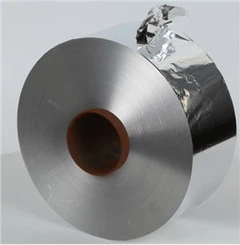


Aluminum foil, commonly known as tin foil or foil, is a tool made of flattened metal aluminum. It is mainly used for cooking in the kitchen, for food, or for making simple and clean materials. Most aluminum foil is shiny on one side and dull on the other. The aluminum foil paper used for food can be wrapped on both sides of the food. Generally, it is recommended to wrap it with a bright surface to improve the heat transfer effect. Because aluminum has a soft texture, good ductility, and a silvery white luster, if the rolled sheet is mounted on an offset paper with a substance such as sodium silicate to make an aluminum foil, it can also be printed.
Aluminum foil has a clean, hygienic and shiny appearance, it can be integrated with many other packaging materials, and the aluminum foil surface prints better than other materials. In addition, aluminum foil has the following characteristics: Extremely clean, hygienic, and no bacteria or microorganisms can grow on its surface. Aluminum foil is a non-toxic packaging material, which can be in direct contact with food without any worry that can endanger human health. Aluminum foil is a kind of odorless and odorless packaging material, which will not make the packaged food have any odor. If the aluminum foil itself is not volatile, it and the packaged food will never dry or shrink. No matter the high temperature or low temperature, the aluminum foil will not have the phenomenon of grease penetration. Aluminum foil has good plasticity, so it can be used to package products of various shapes. Various shapes of containers can also be arbitrarily formed. Aluminum foil has high hardness and high tensile strength, but its tear strength is small, so it is easy to tear.
With the improvement of people's living standards and the development of tourism, the demand for beverages and canned foods such as beer and soft drinks is increasing, which is welcomed by consumers.