



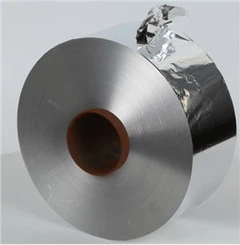


Aluminum's versatility is perhaps best demonstrated in two seemingly disparate forms: the meticulously stamped aluminum circle for a non-stick frying pan and the robust aluminum plate used in structural marine applications. While their end-uses differ dramatically, both demand a mastery of metallurgy and processing to ensure they perform flawlessly under pressure, heat, and deformation.
This article explores the specialized world of aluminum circle (or aluminum disc) for cookware and aluminum plate for industrial use, highlighting the manufacturing rigor required to produce these essential components.
The Art and Science of the Aluminum Circle for Cookware
The humble cookware item-a pot, pan, or baking tray-undergoes a severe manufacturing process. It is deep-drawn, spun, and subjected to high temperatures. The aluminum circle at its heart must possess specific characteristics:
- Excellent Formability: The aluminum disc must be capable of deep drawing without tearing, cracking, or exhibiting earing (uneven edges). This requires a controlled grain structure achieved through precise alloying and annealing.
- Surface Quality: Any surface imperfection on the blank will be magnified in the finished product, leading to cosmetic rejects. A mirror-like, contaminant-free surface is paramount.
- Consistent Temper: Typically supplied in a soft (O-temper) condition, the aluminum circle must have uniform ductility across its entire surface to ensure consistent forming behavior in high-speed stamping presses.
Manufacturers like Qinghai Shuanglin Jiate Metal Technology have developed specific expertise in producing aluminum circle for cookware. Their controlled casting and rolling processes, followed by precise annealing in their 8 furnaces, ensure the material has the ideal microstructure for forming. Furthermore, their tension leveling machines guarantee a flat, stress-free blank that feeds seamlessly into automated cookware production lines.
The Strength and Reliability of Aluminum Plate
On the other end of the spectrum, aluminum plate is used in applications where strength, weldability, and often corrosion resistance are critical. This includes platforming, military vehicles, marine structures, and large machinery components.
Key considerations for industrial aluminum plate include:
- Through-Thickness Consistency: Unlike sheet, plate is thicker, making uniform properties through its entire cross-section a challenge. Advanced hot rolling techniques on wide mills, like the 2500mm line at Qinghai Shuanglin Jiate Metal, are essential to achieve this homogeneity.
- Alloy and Temper Selection: From the common 5052 for marine use to the high-strength 5083 or 6061, a manufacturer must offer a range of alloys and be able to produce them in the correct temper (H112, T651, etc.) to meet mechanical property specifications.
- Dimensional Stability: Large aluminum plate must be free of internal stresses that can cause distortion during machining. Stress-relieving processes are a critical part of the production cycle.
Why an Integrated Manufacturer is the Optimal Source
Sourcing aluminum circle and aluminum plate from the same integrated producer like Qinghai Shuanglin Jiate Metal Technology offers significant logistical and quality benefits. Their comprehensive product range means they understand the unique demands of different industries. Their quality system is applied consistently across all products, whether it's a delicate aluminum disc or a massive aluminum plate. This "one-stop-shop" approach simplifies your supply chain and ensures a uniform standard of excellence.
From Blank to Finished Product: Ensure Your Foundation is Solid
The quality of your manufactured goods, whether it's a premium line of cookware or a critical piece of industrial equipment, is built upon the quality of your aluminum blanks and plate.
Do not let subpar materials become the weakest link in your process.
To discuss your specific requirements for deep-drawing aluminum circle or high-strength aluminum plate, we invite you to connect with Qinghai Shuanglin Jiate Metal Technology. Submit your inquiry with details on alloy, gauge, diameter, and mechanical properties. Their team can provide the material that ensures your products are built to last.