



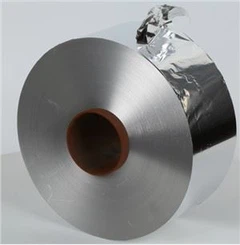


As a supplier of 5083 aluminum strip, I often encounter inquiries about the stress - corrosion cracking resistance of this material. Stress - corrosion cracking (SCC) is a complex phenomenon that can significantly affect the performance and durability of aluminum alloys. In this blog, I will delve into the stress - corrosion cracking resistance of 5083 aluminum strip, exploring its mechanisms, influencing factors, and practical implications.
Understanding Stress - Corrosion Cracking
Stress - corrosion cracking is a form of degradation that occurs when a material is exposed to a corrosive environment while under tensile stress. In the case of 5083 aluminum strip, SCC can lead to the formation of cracks that propagate through the material, potentially causing structural failure. The process typically involves three main factors: a susceptible material, a corrosive environment, and tensile stress.
The 5083 aluminum alloy is a non - heat - treatable alloy that contains magnesium as the primary alloying element. This alloy is known for its excellent corrosion resistance, high strength, and good weldability, making it a popular choice for various applications, including marine, automotive, and aerospace industries. However, under certain conditions, 5083 aluminum strip can be susceptible to SCC.
Mechanisms of Stress - Corrosion Cracking in 5083 Aluminum Strip
There are two main mechanisms by which SCC can occur in 5083 aluminum strip: anodic dissolution and hydrogen embrittlement.
Anodic Dissolution: In this mechanism, the aluminum surface acts as an anode in a corrosion cell. The corrosive environment causes the aluminum to dissolve, forming pits on the surface. As the pits grow, they create stress concentrations, which can lead to crack initiation. Once a crack forms, the anodic dissolution process continues at the crack tip, causing the crack to propagate.
Hydrogen Embrittlement: When aluminum is exposed to a corrosive environment, hydrogen can be generated through the reduction of water or other substances. The hydrogen atoms can diffuse into the aluminum lattice, causing the material to become brittle. Under tensile stress, the brittle regions can crack, leading to SCC.
Factors Affecting the Stress - Corrosion Cracking Resistance of 5083 Aluminum Strip
Alloy Composition
The composition of the 5083 aluminum alloy plays a crucial role in its SCC resistance. The presence of magnesium in the alloy enhances its strength and corrosion resistance. However, excessive magnesium content can increase the susceptibility to SCC. Other alloying elements, such as manganese and chromium, can also affect the SCC resistance by influencing the microstructure and corrosion behavior of the alloy.
Microstructure
The microstructure of 5083 aluminum strip can have a significant impact on its SCC resistance. A fine - grained microstructure generally provides better SCC resistance compared to a coarse - grained microstructure. This is because fine grains can impede the propagation of cracks and reduce the stress concentration at the crack tip. Additionally, the presence of second - phase particles in the microstructure can also affect SCC resistance. For example, intermetallic particles can act as sites for crack initiation and propagation.
Environment
The corrosive environment is a critical factor in SCC. The type of corrosive medium, such as seawater, acids, or alkalis, can significantly affect the SCC behavior of 5083 aluminum strip. Seawater, in particular, is a harsh environment that contains chloride ions, which can accelerate the corrosion process and increase the susceptibility to SCC. The temperature and pH of the environment also play important roles. Higher temperatures and extreme pH values can enhance the corrosion rate and promote SCC.
Stress Level
The magnitude and type of tensile stress applied to the 5083 aluminum strip are important factors in SCC. Higher stress levels increase the probability of crack initiation and propagation. Tensile stresses can be caused by external loads, residual stresses from manufacturing processes, or thermal stresses. Residual stresses, in particular, can be a significant factor in SCC, as they can be present even without external loading.
Testing and Evaluation of Stress - Corrosion Cracking Resistance
To assess the stress - corrosion cracking resistance of 5083 aluminum strip, several testing methods are available. One common method is the slow - strain - rate testing (SSRT), where a specimen is subjected to a constant strain rate in a corrosive environment. The time to failure and the crack propagation rate are measured to evaluate the SCC resistance. Another method is the constant - load testing, where a fixed load is applied to the specimen in a corrosive environment, and the time to failure is recorded.
In addition to these mechanical testing methods, non - destructive testing techniques, such as ultrasonic testing and eddy - current testing, can also be used to detect the presence of cracks in 5083 aluminum strip. These techniques can provide early warning of potential SCC and help prevent structural failures.


Practical Implications for 5083 Aluminum Strip Applications
The stress - corrosion cracking resistance of 5083 aluminum strip has important implications for its applications. In marine applications, where the material is exposed to seawater, SCC can be a significant concern. For example, in shipbuilding, 5083 aluminum strip is used for hull structures, decks, and superstructures. Ensuring the SCC resistance of these components is crucial for the long - term reliability and safety of the vessel.
In the automotive industry, 5083 aluminum strip is used for body panels, chassis components, and other parts. The material's SCC resistance is important to prevent corrosion - related failures and ensure the durability of the vehicle.
In the aerospace industry, 5083 aluminum strip is used in aircraft structures. The high strength and corrosion resistance of the material make it suitable for critical components. However, the strict safety requirements in the aerospace industry demand a thorough understanding of the SCC behavior of 5083 aluminum strip.
How Our 5083 Aluminum Strip Addresses SCC Concerns
As a supplier of Aluminum Alloy Strip, we take several measures to ensure the stress - corrosion cracking resistance of our products. Firstly, we carefully control the alloy composition during the manufacturing process to optimize the SCC resistance. We also use advanced manufacturing techniques to produce a fine - grained microstructure, which enhances the material's resistance to crack propagation.
Our Cold Rolled Aluminum Flat Strip is subjected to strict quality control procedures, including non - destructive testing, to detect any potential defects or cracks. We also provide detailed technical information and support to our customers to help them understand the SCC behavior of our products and select the appropriate materials for their applications.
Conclusion
The stress - corrosion cracking resistance of 5083 aluminum strip is a complex issue that depends on various factors, including alloy composition, microstructure, environment, and stress level. Understanding these factors is crucial for ensuring the long - term performance and durability of 5083 aluminum strip in various applications.
As a supplier of Strip of Aluminum Building Material, we are committed to providing high - quality 5083 aluminum strip with excellent stress - corrosion cracking resistance. If you are interested in purchasing 5083 aluminum strip for your project, please feel free to contact us for more information and to discuss your specific requirements. We look forward to working with you to meet your needs and ensure the success of your project.
References
- Jones, D. A. (1992). Principles and Prevention of Corrosion. Prentice Hall.
- Fontana, M. G. (1986). Corrosion Engineering. McGraw - Hill.
- ASTM G39 - 99. (2017). Standard Test Method for Slow - Strain - Rate Testing to Evaluate the Susceptibility of Metallic Materials to Environment - Assisted Cracking. ASTM International.